Showing posts with label cyber forensics. Show all posts

Thursday, 11 April 2019

Your regular IT Guy just won't make the grade when it comes to a forensic investigation - and this is why...

We often have clients and potential clients advise us "We'll get our IT guy to look, he's excellent"

Now we're not questioning your IT guys skill or experience in computing in any way whatsoever and we're quite sure he's very capable. That being said, when matters take a legal turn and a forensic approach is needed one has to look at the requirements for the assessment itself.
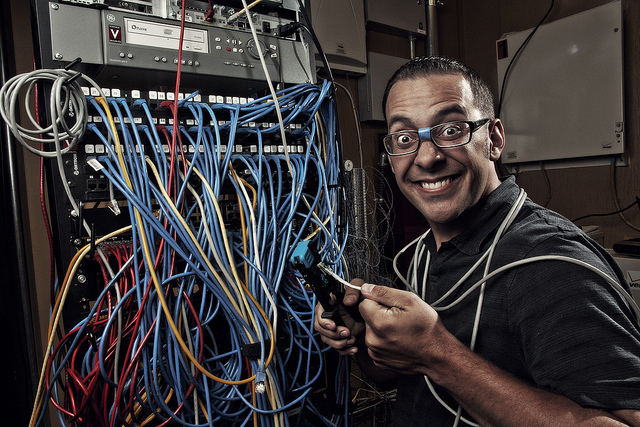

Firstly, will your IT guy stand up in court? Will be stand under cross examination and be admitted as an expert in his field? Will his deeper understanding of operating systems and data analysis pass scrutiny?

Before you can even consider the legal aspects, you need to appreciate that in forensic terms whatever is done must be replicable in court, properly presented as an impartial finding and of course happen within a secure chain of custody - anything less could put the outcome at risk in a court of law.

Digital Forensics is a highly specialized field which requires training in investigative skills and criminal/ civil law. This is before even going down the road of the technical proficiency and qualifications required to trade in the industry. Beyond this, one requires a veritable arsenal of specialized tools and equipment - even the most basic of lab facilities can cost R500k to equip.

Even the most seasoned IT professionals will not have access to the specialized tool set required and a free Linux tool or two just isn't sufficient. Cybercrimes and Forensic Investigation require the use of tools that will be acceptable to a court and do not alter the data in any manner whatsoever during the process (write blocking), this is of course done with a detailed understanding of the legal processes required to offer up evidence in court.

When engaging a Digital Forensics specialist, you're not just getting a set of hands - you're hiring an investigative professional with specialist skills armed with the latest technologies to ensure that evidence is acquired in a sound manner and correctly presented to court.

When you need a Forensic Investigator, ensure that you're dealing with a suitably qualified professional who has the academic qualifications as well as the track record to appear in court to quantify the evidence acquired and advise you accordingly during the investigation.

Related image

We do all forms of digital forensics such as cyber forensics (penetration testing / hacking recovery / cyber investigations), cellular phone analysis, hard drive analysis, device acquisitions and due diligence investigations. Please contact the TCG Digital Forensics Division on contact@tcgcape.co.za or call 021 110 0422 


Written by Craig Pederson

Wednesday, 27 February 2019

Protecting yourself from Package Tracking Scams


Scammers are creative, they seem to be coming up with new scams every week – and people always seem to fall for them!

Related image

In the past few years, large amounts of package tracking scams have popped up. The scam will include an email trying to convince you to click a link or give out your private information. Most of the time the email will advise you that there is a shipping problem and you need to take some steps to clear the package that you didn’t even know you were receiving.

Even though most of these scams are easy to spot because of their awful English spelling and grammar, some are so well done that they can be difficult to spot. Keep an eye out for these signs so you do not fall victim to a tracking scam…

- Odd URLs
- Requests to input your private information
- Requests to click a link
- Email messages starting with “Dear Customer”, etc.

NEVER give out any information about yourself and never click on links in an email, no matter how real it may look!

The bottom line is if you are not expecting a package and someone invites you to click a link to track a shipment of a brand new iPhone you never ordered – delete the message and move on!

At TCG Digital Forensics, we do all forms of digital forensics services such as cyber forensics, hacking recovery, cellular phone analysis and digital track and tracing! Give us a call on 021 110 0422 or email contact@tcgforensics.co.za to discuss your specific requirements.

Thursday, 13 December 2018

What is the Difference Between Digital Forensics and Information Security


Before we get into the differences between digital forensics and information security, let’s stop and take a look at how they are alike.

Image result for digital forensics

Both digital forensics and information security are aimed at protecting your digital data, goods and valuables as well as digital resources. People who are involved in digital forensics or information security can work in a range of industries, including private businesses and organisations. Why can people in the digital forensics and information security work in so many different industries? Because, companies know that as the world becomes more digitally dependant so does the need to keep their technology and systems properly secured. Digital forensics and information security specialists are becoming more and more popular as the demand for their skillset grows.

But, just because digital forensics and information security are both focused on digital goods and resources doesn’t mean the two are both closely associated with each other doesn’t mean they are the same.

It is best to think of digital forensics and information security as two different sides of the same thing, so the services and work that is done is very much the same, but it does have differences.

So what is the difference between digital forensics and information security? To put it into simple terms that everyone can understand, information security is about preventing and protecting against online and digital threats. On the other hand digital forensics is about the response that comes after.

Related image

Let’s look at it like this – information security is the team that executes and supports the information security system with the aim being to protect individuals and businesses against cyber threats. If information security fails to protect the users and the systems are broken, then this is where the digital forensics experts come into the picture – they will put their skills to use by singling out the threat, understanding it and trying to recover all the data that was lost and/or stolen.

At TCG Digital Forensics, we offer all our clients clean, professional and affordable digital forensics services as well as information security – all supplied by our team of skilled digital forensics experts. Do not hesitate to contact us to discuss your requirements; simply give us a call on 021 110 0422 or email contact@tcgforensics.co.za

Wednesday, 9 May 2018

Do you know the History of Digital Forensics?

Before the 1980s, crimes involving computers and digital devices were dealt with using existing laws. So, the field of digital forensics is relatively new. While its history may be short, it is quite complex.

Image result for old computer typing

As the years went by, the range of digital crimes being committed increased, but it was not until the 1980s that federal laws began to include computer offences. Canada was actually the first country to pass legislation in 1983, followed by the US Federal Computer Fraud and Abuse Act in 1986.

The fact that computer and digital crimes grew so much during the 1980s and the 1990s caused law enforcement agencies to start making specilised groups to deal with the technical aspects of the investigation. For example, the Computer Analysis and Response Team that the FBI formed in 1984.

Throughout the 1990s there was a high demand for these new investigative resources, this lead to the creation of regional and even local level groups to help handle the load. But, it was not until 1992 that the term “computer forensics” was actually used in academic literature.

Since the year 2000, a lot of people and agencies have written and published guidelines for digital forensics. A European lead international treaty, the Convention on Cyber crime, came into force in 2004 with the aim of reconciling national computer crime laws, investigative techniques and international co-operation.

Image result for digital forensicsThe issue of training also received some attention. Companies, such as forensic software developers, began to offer certification programs, and digital forensic analysis was included as a topic at the UK specialist investigator training facility.

Since the late 1990s digital devices have become available everywhere, basically everyone has a phone or some kind of digital device. Devices have advanced way beyond simply communicating, they are great forms of information, even for crime not usually associated with digital forensics. However, digital analysis of phones has lagged behind traditional computer media, mostly because of problems over the ownership of the devices.

The complex field of digital forensics will always have unresolved issues. Many issues will include; increasing size of digital media, the wide availability of encryption to basically everyone, the variety of operating systems, increasing number of people owning multiple devices and lets not forget the legal limitations on investigators.

The TCG Digital Forensics Division is based in Cape Town and combines the experience digital forensic seasoned investigators with the latest technologies to achieve the results that you require! We do all forms of Digital Forensics such as Cyber Forensics (Penetration Testing / Hacking Recovery / Cyber Investigations), Cellular Phone Analysis, Hard Drive Analysis, Device Acquisitions and Due Diligence Investigations.

Wednesday, 7 February 2018

Smartphone Safety for Children

It’s 2018, we’re more connected than we were a few years ago and we’re continuing to grow as time goes by.

Related image

These days, teenagers and even small children are getting caught up in all the new technology that is being introduced. The ability to communicate with friends with the push of a button is a sought after thing, and having a smartphone is a privilege that all teenagers assume they should have. However smartphones can bring a few dangers with them.

It’s about time you sit down with your children and have a chat with them about smartphone safety…

You will never be able to remove them completely from the world of technology, so make sure to sit down and have an educational conversation instead of arguing with them.

Who are they talking to? Are they chatting to their friends or someone they met online? Let them know that people are usually not who they seem to be online and they should apply “stranger danger” online as well as in the street.

What kind of content are they looking at? Are the apps, games, videos, etc. they’re looking at appropriate for their age? Remember to be aware of any cyberbullying is taking place.

Are they texting and driving? Texting and driving is beyond dangerous, especially for young teens who have just started driving and have little experience. There are apps you have use to control this, but there should be strict rules in place too.

Related image


Do you have any questions about smartphone safety or cellular forensics? At TCG Digital Forensics, we offer a range of services, from cyber forensics and mobile phone analysis to image enhancements and suspect profiling. Contact us on 087 001 0523 or contact@tcgforensics.co.za