Showing posts with label digital forensics cape town. Show all posts

Tuesday, 7 January 2020

Professional, Affordable Digital Forensics Services in South Africa

Digital Forensics is a lot more complex than using a range of well-developed forensic software that can be bought online to investigate something – it is a skilled understanding of all things digital (this includes cellular and computer based forensics), the investigative process, and criminal as well as civil investigations. 

Image result for digital forensics


The TCG Digital Forensics division came to be in the year 2006 when it separated from The Computer Guyz and began offering Digital Forensic services including digital fraud investigations, service of summons, data recovery and CFE in South Africa.

With over 18 years of experience in trading in South Africa, we know exactly where we should be when it comes to our customers market needs as well as the Digital Forensics field. Our incident response team is trained with a broad background of skills ranging from IT intelligence and data investigation to network security and so much more.

At TCG Digital Forensics, we use the latest software and a system of techniques to collect, research, investigate, and uncover the digital evidence that you require. Our digital forensics services are designed around the requirements of a specific set of clients which includes investigative firms, attorneys, investigators, forensic auditors and blue chip customers, however we do cover a wider scope should you need our assistance.

Image result for digital forensic services llc

Do you have a particular set of requirements? Please do not hesitate to contact us at any time. Our main digital forensic investigation offices are in Cape Town, but we do have offices in the Pretoria area and a presence in the coastal area of Durban.

We are proud to offer all our customers clean, professional and methodical digital forensic services supplied by our professional incident response team. Here are some of the Digital Forensic services, including cellular forensics services and computer forensics services that we provide in Cape Town, Pretoria, Durban and nationally…

Incident Response Team
Business Continuity Planning
Cyber Penetration Testing
Hacking Recovery
Cyber Investigations
Cellular Phone Analysis
Hard Disk Drive Analysis
Device Acquisition
Testimony
Due Diligence Investigations
Image Enhancement
Certified Fraud Examiner Services
Service of Summons

Image result for hacking

Learn more about our Digital Forensics services by visiting our website www.tcgforensics.co.za

Wednesday, 6 November 2019

The Top most Common Types of Fraud!

When you become the victim of fraud, not only do you have to deal with the aftermath of someone scamming you, such as financial loss, but you also have to deal with the emotional side of it.


There are a range of different types of fraud, either way all of them can cause feelings of anger, devastation, fear and frustration. 

Do you think you have been the victim of fraud? At the TCG Forensic Division, we offer a range of digital forensic services, including fraud investigations. Please feel free to contact us on 021 110 0422 or email contact@tcgforensics.co.za to have a confidential discussion around your particular requirements.

Here are the 11 most common types of fraud to look out for…

1. Insurance Claim Fraud. People who make false claims, such as stage accidents, to receive insurance money from their insurance company. This can be a difficult type of fraud to investigate because some injuries can be difficult to medically identify and debate.  

2. Corporate Fraud. This includes fraud issues such as theft of information, such as private client information. This kind of fraud can lead to a damaged business reputation.

3. Financial Fraud. Evading tax, public corruption, healthcare fraud issues, telemarketing fraud and terrorist financing are all part of financial fraud.

4. Identity Theft. Those who are the victim of identity theft will have to look out for suspicious loan or credit card applications, strange withdrawals from bank accounts as well as using a different name to receive benefits.

5. Internet Fraud. Of course, this type of fraud always occurs online where a cybercriminal will try and take advantage with ransomware or phishing scams. Usually this includes stealing private information such as banking and login details.

6. Corporate Slip & Fall. Fraud like this is planned out by individuals in order to file a claim. People will go as far as to pretend to fall or throwing liquid on the floor in order to ensure a slip.

7. Transit Fraud. Companies who offer transportation, whether it is a bus, train or taxi, will often see fraud such as this where passengers will not seat or secure themselves properly, leading to them falling and injuring themselves on purpose.

8. Ticket Fraud. In some countries, the level of ticket fraud is significant. People will buy tickets online from a fake website; these tickets are not legitimate and have often already been used or do not exist.

9. Mechanical Fraud. This type of fraud is not common, however there are many people who fall victim to mechanics who scam their customers. Often they will be overpriced or they will request things to be fixed that are not broken.

10. Expense Claim Fraud. This often happens in large companies where employees will pocket run over business expenses for themselves. An example could be asking for money to stay in an expensive hotel when in fact they are staying in a cheap accommodation and pocketing the remainder.

11. Inventory Theft. Large companies face the issue of inventory theft when unsupervised employees steal products or order more than the store needs and take the rest for themselves. This may include “expired” food products when they are in fact not expired at all.

Wednesday, 11 September 2019

What’s doable in an Audio Investigation?

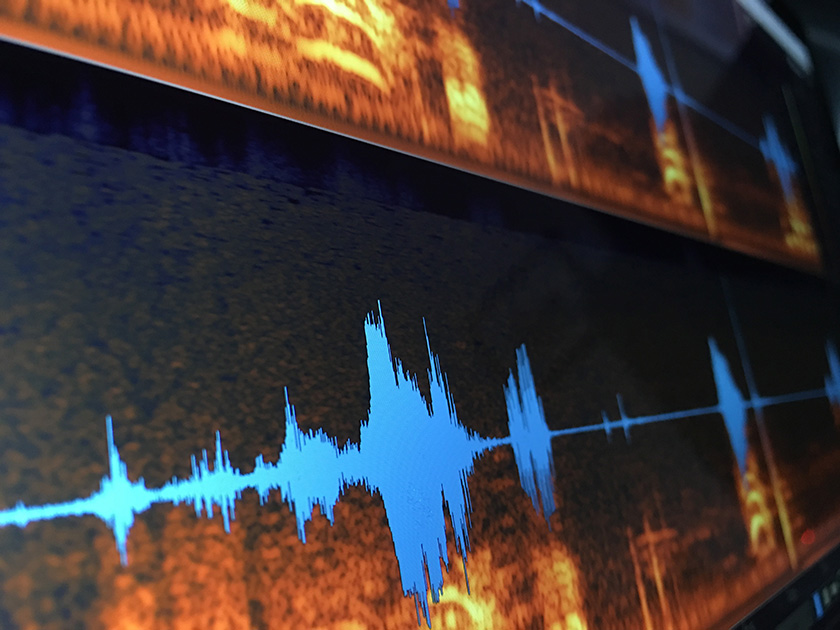
Audio forensics and investigations are defined as the field of digital forensics that is related to the acquisition, analysis, and evaluation of sound recordings. The results of an audio investigation are usually presented as evidence in court cases, whether they come from a criminal investigation or part of an official inquiry.


We spoke to Sound Engineer, Kiana Schulla Pronk, to find out all there is to know about what is doable in an audio investigation.

I was born and raised in Cape Town, South Africa. After becoming involved in the music scene in my high school years, I attended City Varsity School of Media and Creative Arts in Cape Town (CBD) 2016 - 2017. I completed a 2-year Diploma in Sound Engineering and graduated in March of 2018.

This institution had the resources to train us and give us the tools to become an expert in the field that we study, to which I chose Sound Engineering. For 2 years, I studied full time and underwent training to become an Audio Engineer.

Within the two years of studying at this institution. We learned the basics of the broad spectrum, categorising it into a few sectors – all with sound-based, but different processes. Our different categories would differ between Live Sound (concerts), Film Audio Engineer, Mastering and Production, Composition and Post Production.

Where I felt my strengths were was in the post-production sector, analysing audio, as well as cleaning ‘noisy’ audio as well as the Sound Design sector.

I am proficient in DAW Systems such as Pro Tools, Cubase and Reason Rewire. Frequency hearing tests and analysing sound on various frequencies were part of my training.  

Since the year 2018, I have been assisting various companies with audio analysis, identification, and comparison. Additionally, I have been doing my training with the company TCG Digital Forensics and educating myself with software systems such as Praat & Diamond Cut Forensics Audio Lab to assist in finding, analysing and recording evidence that is relevant to a case.

In analysing Audio with the above-mentioned software, we have the tools to:

Forensics Audio Authentication, Voice-Printing & Formant Analysis
File Transcription / Time Expansion / Speed and/or Pitch Change
Audio Restoration & Enhancement
Audio Editing & Voice Garbling / Voice Disguising
Audio & Acoustical Measurements
Audio File Format Conversions
Statistical Measurement Tools


Any piece of audio recording can be looked at and with the information on how the audio piece is recorded, can already give investigators hints/tip offs in disciplinary hearings or official court cases.

I am currently rendering services to: 

Company Name: TCG Digital Forensics (Craig Pedersen)
Location: 32 Woodbridge Business park, 452 Koeberg Road, Milnerton, 7441
Tel: +27 21 110 0422 | Mobile: +27 79 691 0138
Email: contact@tcgforensics.co.za
Website:  www.tcgforensics.co.za  

Company Name: TSU International – K&E Division (Adv Herman Bosman)
Location: 17 Main Road, Strand, 7140
Tel: +27 21 492 5951 / Mobile: +27 82 857 6096
Email: k.e1@tsuint.com
Website:  www.tsuint.com

Wednesday, 28 August 2019

What is Ethical Hacking?

Ethical hacking, sometimes known as white hat hacking is when a digital forensics expert or OSINT investigator attempts to penetrate a computer system, network or app on behalf of the owners – with their permission. Ethical hacking is usually done to find if there is any security vulnerabilities that a hacker or cybercriminal could use to exploit someone.

The purpose of ethical hacking is to test the security of the systems involved and identify if there are any vulnerabilities in the system as well as the network or infrastructure. Investigators involved will often attempt to exploit the vulnerabilities themselves to see whether malicious activities are possible.


Black hat hackers are the unethical counterpart of ethical hackers. Rather than take advantage, ethical hackers will use their skills to document if there are any weaknesses in the systems and give advice on how to fix them and then strengthen their overall security systems.

Here are some ways ethical hacking done by digital forensics experts involve in OSINT (Open Source Intelligence) can help businesses and organisations:

1. Finding Vulnerabilities: By using ethical hacking you can discover if the IT security measures are working properly as well as whether they need to be updated. A business can use the advice from ethical hackers and improve their overall security to stay safe from cyber-attacks, including online scams and fraud.

2. Demonstrate Cybercrime Methods: These demonstrations can help show users how malicious hackers will attach their systems and create disasters for businesses. Those who have an in-depth knowledge of this are better able to prevent it from happening again in the future.

3. Prepare for a Cyber-attack: The one way to destroy a business is a cyber-attack, especially small businesses, but businesses are still not prepared! Ethical hackers know how cybercriminals work so they can assist businesses and business owners with prepare for the future and better adapt to online threats.

Some say that hacking is hacking, but ethical hacking is done by professionals to assist businesses and organisations with their security systems and ensure they are effective and successful.

Is your security system up to par? Contact the OSINT or digital forensics department on 021 110 0422 or email contact@osint.co.za | contact@tcgforensics.co.za. Alternatively, you can find out more on the website www.osint.co.za | www.tcgforensics.co.za

Wednesday, 3 July 2019

Top 8 things you should be doing in regards to Internet Security!

We do everything online these days! Our cell phones, laptops and PCs are basically an extension of ourselves, that is why being extra careful when it comes to internet security is so important.


It is so surprising that people still do not bother with their internet security – you are not invisible, as soon as you go online you become a possible victim of so many things including scams, fraud, identity theft and so much more.

One of the safest methods to follow is to purchase a high quality internet security software that will have regular updates, remove viruses, scan on a regular basis and notify you of malicious activities.

- Keep your passwords security and don’t share with anyone

- Install and update security software on your PC and cell phone

- Be wary of phone calls asking for personal information or access to your PC

- Do not post financial or personal information on social media networks

- Be extra careful when buying online and also use a safe payment method

- Protect your cell phone from malware and viruses just as you would your PC

- Double check bank accounts and statements for anything suspicious

- Talk with your family and friends and encourage them to report anything unusual!

Always remember it is not a matter of IF you will become a victim, it is a matter of WHEN! Take into consideration the things you should be doing to make sure you are secure online.

Are you scared you’ve become the next victim? Please contact TCG Digital Forensics as soon as possible and we will do what we can to assist you! Call us on 021 110 0422 or email contact@tcgforensics.co.za | Learn more here www.tcgforensics.co.za or www.osint.co.za

Monday, 1 July 2019

Always think before you hit Send!


Did you know that your SMSs, WhatsApp or social network inbox messages can be used as evidence against you in a court of law? Well, for those who are possibly heading towards a divorce or breakup need to be extra careful about sending messages!

Related image

Because of all the advancements in the area of digital forensics, including social media investigations and cellular forensics, there has been a massive spike in cases that use evidence found on digital devices such as smartphones and computers.

Many people send messages without even thinking twice, this is known as “spontaneous venting”, however it can come back to hurt you, so always rethink what you’re saying before you hit send…

When it comes to evidence in a divorce, usually a nasty one, things such as SMSs, WhatsApp messages and other direct messages are most commonly used as well as emails, phone numbers, GPS locations and search history.

Most divorce lawyers will tell their clients to stay off social media platforms and avoid sending nasty messages and posting unnecessary statuses, the sad thing is that most of these clients choose not to follow this vital advice.

Anything that is in writing, you have to assume that someday a judge is going to see it. So, if it is not something that you don’t want a judge to see – don’t hit the send button!

You can always erase your messages, but that doesn’t mean they’re gone forever…


With the latest tools and forensic software, the digital forensics investigators at the TCG Forensics Division as well as OSINT are able to assist investigators and attorneys in Cape Town, Pretoria and nationally. For more information about the digital forensics services on offer please call 021 110 0422 or email contact@tcgforensics.co.za

Wednesday, 22 May 2019

What can be done about Identity Theft?

With millions of people affected by identity theft every year, this online crime is nothing new. But as the years go by we will see fraudsters going to extreme lengths in order to steal your private information.

One method that will be widespread is using captured online videos. But how will this work? Online criminals will post fake job vacancies and request a short video and/or a meeting over Skype. 
Regardless of how they will obtain the video, they will have a recording of you talking about yourself, this will aide them when they open an online bank account!

Why is this happening? As banks try to compete to get the attention of the younger generation they will focus more on how easy the banking application is to use instead of focusing on the long term benefits of signing up.

Related image

What can we do?

Prevention is vital. Always be vigilant and keep in mind that your digital information is just as valuable as your physical documents and paperwork…

Have you been the victim of identity theft? We will do what we can to assist you! Contact The TCG Digital Forensics Division today on 021 110 0422 or email contact@tcgforensics.co.za

Thursday, 11 April 2019

Your regular IT Guy just won't make the grade when it comes to a forensic investigation - and this is why...

We often have clients and potential clients advise us "We'll get our IT guy to look, he's excellent"

Now we're not questioning your IT guys skill or experience in computing in any way whatsoever and we're quite sure he's very capable. That being said, when matters take a legal turn and a forensic approach is needed one has to look at the requirements for the assessment itself.


Firstly, will your IT guy stand up in court? Will be stand under cross examination and be admitted as an expert in his field? Will his deeper understanding of operating systems and data analysis pass scrutiny?

Before you can even consider the legal aspects, you need to appreciate that in forensic terms whatever is done must be replicable in court, properly presented as an impartial finding and of course happen within a secure chain of custody - anything less could put the outcome at risk in a court of law.

Digital Forensics is a highly specialized field which requires training in investigative skills and criminal/ civil law. This is before even going down the road of the technical proficiency and qualifications required to trade in the industry. Beyond this, one requires a veritable arsenal of specialized tools and equipment - even the most basic of lab facilities can cost R500k to equip.

Even the most seasoned IT professionals will not have access to the specialized tool set required and a free Linux tool or two just isn't sufficient. Cybercrimes and Forensic Investigation require the use of tools that will be acceptable to a court and do not alter the data in any manner whatsoever during the process (write blocking), this is of course done with a detailed understanding of the legal processes required to offer up evidence in court.

When engaging a Digital Forensics specialist, you're not just getting a set of hands - you're hiring an investigative professional with specialist skills armed with the latest technologies to ensure that evidence is acquired in a sound manner and correctly presented to court.

When you need a Forensic Investigator, ensure that you're dealing with a suitably qualified professional who has the academic qualifications as well as the track record to appear in court to quantify the evidence acquired and advise you accordingly during the investigation.

Related image

We do all forms of digital forensics such as cyber forensics (penetration testing / hacking recovery / cyber investigations), cellular phone analysis, hard drive analysis, device acquisitions and due diligence investigations. Please contact the TCG Digital Forensics Division on contact@tcgcape.co.za or call 021 110 0422 


Written by Craig Pederson

Wednesday, 10 October 2018

What to do when your Hard Drive eventually gives in


Has your hard drive been giving you trouble recently? Has it been acting strange – making noises, moving extra slow and making it almost impossible to find your files? Don’t worry you’re not alone, every hard drive eventually gives in, so it might be time to say goodbye!

Image result for hard drive fail

When your hard drive is close to giving in, always look out for these signs…

- Strange noises
- Files becoming corrupted
- Crashing
- Slow speeds

These are the most common signs you’ll see, especially if your hard drive is a few years old. If you have an old spinning hard drive, the moving parts can deteriorate over the years causing it to break.

New hard drives, such as solid state drives (SSD) do not have any moving parts, however they too will eventually break when the storage cells have degraded. Although, keep in mind that solid state hard drives are much more reliable and last a lot longer.

Image result for hard drive failOver the years your hard drive may fail gradually, unless it is exposed to excessive heat or physical trauma. So, it is best to always keep a watchful eye on your hard drive’s health, this way you can make sure you are prepared and avoid losing all your precious data. However sometimes the inevitable happens and your hard drive does fail, this is when it is time to call in the professionals.

We offer detailed drive analysis and recovery of artefacts and data all in one. Using a physical image of the hard disk drive, we are able to provide a deep scan of deleted items and trace elements from a hard disk drive.

We use world leader Magnet Axiom for hard disk drive analysis along with a handful of proprietary tools and industry accepted technologies. While we are able to offer on-site triage and acquisition, data analysis is best done within our lab as it is a time consuming and resource intensive operation. We run the latest i7 processing units to minimise analysis time and deliver fast results in the form of a portable case file that you may interrogate at your convenience.

We follow a full secure chain of custody from device acquisition through to analysis and return of exhibits. Our digital forensics lab facility is based in Cape Town – please feel free to contact us on 087 001 0523 or email contact@tcgforensics.co.za

Wednesday, 3 October 2018

Cellular Best Practices for At-Risk Individuals

Image result for using computer

Email


· Register a unique email address to use when setting up your phone. Do not use your usual email address. You can add that later as a functional email account.

· Use a totally unique password for the email account with which you setup your phone.

· NEVER give anyone the above email address or password and do not use that email address for anything else.

· iPhone is safer than Android – provided that you follow these guidelines – specifically around using an anonymous email address.

· Always use solid, complex passcodes.

Data

· Enable encryption to secure your data if your phone ever gets lost.

· NEVER migrate data between phones. Rather back the data up and transfer it separately.

· NEVER hand your phone to anyone. Keep it in your hands if you need to show them something.

· Avoid linking your phone to any computer you do not have control of.

· KNOW what data you are backing up to Google, WhatsApp etc. be sure it is the minimum required information and no more.

General

· Keep apps to a bare minimum – if you don’t use it or need it, take it off!

· Never jailbreak an iPhone or root an Android device – only load apps from the relevant app store.

· Avoid using Wi-Fi. Only use Wi-Fi that is manually configured with a hidden SSID and Mac Addressing linking your phone to it. Outside of this, leave Wi-Fi OFF completely.

· Unless you absolutely must use Bluetooth – disable it

· Ensure that Kaspersky or Bitdefender are loaded on your device.

· Make sure that your handset is configured to automatically update your operating system – security vulnerabilities are exposed regularly and fixed. You need them!

For a wide range of digital forensics services including fraud investigations, CFE in South Africa, cellular forensics, service of summons, penetration testing, data recovery and so much more - give us a call now on 087 001 0523 / 021 110 0422 or email contact@tcgforensics.co.za. For more information visit our website here... www.tcgforensics.co.za

Wednesday, 8 August 2018

11 Common Types of Fraud


When you become the victim of fraud, not only do you have to deal with the aftermath of someone scamming you, such as financial loss, but you also have to deal with the emotional side of it.

Image result for fraud

There are a range of different types of fraud, either way all of them can cause feelings of anger, devastation, fear and frustration. 

Do you think you have been the victim of fraud? At the TCG Forensic Division, we offer a range of digital forensic services, including fraud investigations. Please feel free to contact us on 087 001 0523 or email contact@tcgforensics.co.za to have a confidential discussion around your particular requirements.
Here are the 11 most common types of fraud to look out for…

1. Insurance Claim Fraud. People who make false claims, such as stage accidents, to receive insurance money from their insurance company. This can be a difficult type of fraud to investigate because some injuries can be difficult to medically identify and debate.  

2. Corporate Fraud. This includes fraud issues such as theft of information, such as private client information. This kind of fraud can lead to a damaged business reputation.

3. Financial Fraud. Evading tax, public corruption, healthcare fraud issues, telemarketing fraud and terrorist financing are all part of financial fraud.

4. Identity Theft. Those who are the victim of identity theft will have to look out for suspicious loan or credit card applications, strange withdrawals from bank accounts as well as using a different name to receive benefits.

5. Internet Fraud. Of course, this type of fraud always occurs online where a cybercriminal will try and take advantage with ransomware or phishing scams. Usually this includes stealing private information such as banking and login details.

6. Corporate Slip & Fall. Fraud like this is planned out by individuals in order to file a claim. People will go as far as to pretend to fall or throwing liquid on the floor in order to ensure a slip.

7. Transit Fraud. Companies who offer transportation, whether it is a bus, train or taxi, will often see fraud such as this where passengers will not seat or secure themselves properly, leading to them falling and injuring themselves on purpose.

8. Ticket Fraud. In some countries, the level of ticket fraud is significant. People will buy tickets online from a fake website; these tickets are not legitimate and have often already been used or do not exist.

9. Mechanical Fraud. This type of fraud is not common, however there are many people who fall victim to mechanics who scam their customers. Often they will be overpriced or they will request things to be fixed that are not broken.

10. Expense Claim Fraud. This often happens in large companies where employees will pocket run over business expenses for themselves. An example could be asking for money to stay in an expensive hotel when in fact they are staying in a cheap accommodation and pocketing the remainder.

11. Inventory Theft. Large companies face the issue of inventory theft when unsupervised employees steal products or order more than the store needs and take the rest for themselves. This may include “expired” food products when they are in fact not expired at all.

Wednesday, 11 July 2018

What is a Due Diligence Investigation & why should one be conducted?


A due diligence investigation needs to be conducted to assess the qualifications and track records of the people involved in a certain business transaction. This type of investigation needs to identify or reveal if there are any potential inconsistencies, misrepresentations, omissions or controversies.

Related image

So – why should a due diligence investigation be conducted?

Any business that is involved with IPO’s, mergers, acquisitions, joint venture, partnership deals and other business situations, should always contact an expert to discuss certain needs and assist in a professional due diligence investigation. At the TCG Digital Forensic Division in Cape Town, we offer all forms of digital forensic services, including due diligence investigations – do not hesitate to give us a call on 087 001 0523 or email contact@tcgforensics.co.za if you wish to have a confidential discussion around your particular requirements.

Our digital forensic services can bring to your attention any past dealings and behaviour which can give you an inside look into what you can expect from your business dealings in the future.

Here are some of the most important benefits of due diligence investigations….

> Reduced risk
> Minimised possible embarrassing situations
> Complete peace of mind
> Ensured reliability
> No hidden surprises
> It is a vital part of your business practice

Related image

If you fail to do a due diligence investigation, you may be inviting certain issues and even business disasters – get your due diligence investigation done and you will be able to spot and eliminate the problems.

Thursday, 11 January 2018

The most important skills you need for a career in Digital Forensics

Tech meets criminal justice in the field of digital forensics--a branch of forensic science dealing with recovering and analyzing information from data storage devices (including computers, phones, networks, and more). Digital forensics examiners help track down hackers, recover stolen data, follow computer attacks back to their source, and aid in other types of investigations involving computers.

Image result for digital forensics

Want to know what it takes to become a digital forensics examiner? Here are some key skills needed for the career…

Analytical talent: It stands to reason that anyone in an investigative role needs to have the analytical skills required to piece together information and solve the case. Cyber security expert, Ondrej Krehel says: “High speed of analytical thinking, and precise observation skills, which are often gained and tested at high tech military and intelligence cyber units are also important skills to have." The ability to find patterns and make correlations is crucial in the investigation process!

Computer science/tech skills: Since digital forensics is such a technical field, it helps to come from a background studying or working with computer science. An important quality of any great digital forensics investigator is a deep understanding of how technology really works. If you have experience with computer systems, programming, or other related fields, this will help you transition into digital forensics since you will already have a general knowledge of how technology and networks work, how digital systems interact with each other, and what is possible from a compromise perspective.

Understanding of cybersecurity: The field of digital forensics is all about solving cybercrimes--and who has a better knowledge of those than cybersecurity professionals? It's impossible to guard against data breaches without knowing the techniques being used to target systems, and this same knowledge that helps to prevent crimes also is useful in solving them. Many of the most talented forensics examiners will have had experience working on a cybersecurity team.

Related image

Organisation: You can have a messy desk and be a great digital forensics examiner--but mental organisation is a must, as is organised record-keeping. Being extremely organised and thorough is a must! Documentation of your findings is necessary as it is often required to present them to others such as attorneys and judges.

Communication skills: In relation to the above point, digital forensics doesn't exist in a vacuum. The team you work with and people you work for need to know what's going on, meaning that you need to communicate it to them. According to Ondrej Krehel, "Having both strong writing and speaking skills is extremely important to effectively communicate your findings to other team members and your clients."

Desire to learn: Cybercrime is constantly evolving, so it's a must to keep your knowledge up-to-date and always seek out ways to be better at your job. To be a digital forensics examiner, you must have great pride to be one of the best in what you do. Self-critique skills for constant improvement of your work is a very desired trait!

As for higher education, degrees are helpful in breaking into the digital forensics field, but what really establishes someone's credentials is the product of their work and the ability to conduct digital forensics in very detail-oriented manner!
At TCG Digital Forensics, we do all forms of Digital Forensics such as Cyber Forensics (Penetration Testing / Hacking Recovery / Cyber Investigations), Cellular Phone Analysis, Hard Drive Analysis, Device Acquisitions and Due Diligence Investigations.

Wednesday, 23 August 2017

The Forensic Division

Digital Forensics (cellular & computer based) requires much more than a well-developed software that can be purchased over the internet. It requires a thorough understanding of the investigative process, the law of evidence, excellent problem solving skills, a strong attention to detail as well as an appropriate background to criminal and civil investigations. 

Image result for digital forensics

We combine the experience of seasoned investigators with both criminal and civil backgrounds with the latest technologies to achieve the results that you require. 

Cellular phones all carry data on them – often more than we realize. Cellular forensics is the science of retrieving what is seen as well as what has been erased. We are able to achieve full recovery of deleted text messages, WhatsApp conversations and images.

Computers hold a wealth of information unseen. To the untrained eye, data may well be gone, deleted forever. This is however most commonly not the case.

Using state-of-the-art software and hardware processes we are able to recover e-mails, conversation threads, photographs, files and related data to show traces of what has been done when and how on computers, laptops and tablets.

Our forensic services are designed around the needs of attorneys, investigators and forensics audits, but also cover a wider scope. Some of the digital forensic and cellular forensic services we provide, in Cape Town and nationally, are:

      -          Cellular Forensics (Full profile)
      -          Data Recovery
      -          SMS Recovery
      -          Recovery of Chat History
      -          Recovery of WhatsApp History
      -          Digital Suspect Profiling
      -          Digital Image Verification
      -          Image Enhancement
      -          CCTV Footage Enhancement
      -          Password Recovery
      -          Mail Recovery


Related image


Should you require our assistance with forensic assessment of a cellular device, tablet, computer, laptop or server, please don’t hesitate to contact us at any time. Our offices are based in Cape Town; however we have reach to the rest of the country as required.

Contact The TCG Forensic Division today to discuss your requirements - call 079 691 0138 or email craig@tcgforensics.co.za

Wednesday, 26 October 2016

How a digital device becomes involved in a crime

Crimes committed using a digital device essentially employ a hi-tech method to carry out what is usually a traditional crime. Thus, crimes such as blackmail which traditionally evoke images of newspaper cuttings collaged together to create the archetypal ransom note nowadays employ computers to produce the ransom note, be it a printed document or an email.

Image result

Examples of other traditional crimes where a digital device has been applied include instant messaging, which can used to commit harassment; email, which is applied to commit fraud though 'phishing' scams; mobile phones to record assaults in what has come to be known as 'happy slapping' and then there are the peer to peer file sharing programs which have been used extensively to download and distribute pictures portraying pedophilia.

The list, it seems, is endless and so is the workload on any hi-tech crime unit to deal with such cases.

Not all crimes committed using a digital device use it as a means to an end. Hacking a computer system without authority is a crime targeted at the computer system itself. So to is a denial of service (DOS) attack on a websites or the intentionally distribution of a virus.


At DLA Digital Forensics, we combine the experience of two seasoned investigators with both criminal and civil backgrounds with the latest technologies to achieve the results that you require. From data recovery, recovery of chat history, digital suspect profiling and so much more - contact DLA today!

Wednesday, 31 August 2016

Video Enhancement: What is and is not possible

Digital forensic and video enhancement specialists are asked on a regular basis to enhance images that have been recorded.

Image result

One of the goals of video enhancement, in some cases, is to be able to see persons faces better than they are when viewing the video under normal circumstances. Other times they are asked to enlarge and clarify a video in order to identify, for instance, the license plate on a car that is alleged to be involved in criminal activity.

With video enhancement, forensic experts can only do so much. In a lot of cases, the video that has been exported from the surveillance system is small and when enlarged, or zoomed in on the objects of interest they become very blurry and distorted.

BUT, we are proud to announce that our forensic experts at DLA will now be an Africa exclusive agent for Ikena Forensic Software! Not only does Ikena offer some of the best software programs available today, they also insist that full enhancement of your videos and images will always be possible!

Now you no longer have to stress about not having the highest possible quality surveillance system and video – Take a look below to see Ikena video enhancement in action...


Wednesday, 29 June 2016

How Computer Forensics Works - Standards of Evidence

If the investigators believe the computer system is only acting as a storage device, they usually aren't allowed to seize the hardware itself. This limits any evidence investigation to the field. On the other hand, if the investigators believe the hardware itself is evidence, they can seize the hardware and bring it to another location. For example, if the computer is stolen property, then the investigators could seize the hardware.


In order to use evidence from a computer system in court, the prosecution must authenticate the evidence. That is, the prosecution must be able to prove that the information presented as evidence came from the suspect's computer and that it remains unaltered.

Although it's generally acknowledged that tampering with computer data is both possible and relatively simple to do, the courts so far haven't discounted computer evidence completely. Rather, the courts require proof or evidence of tampering before dismissing computer evidence.

Another consideration the courts take into account with computer evidence is hearsay. Hearsay is a term referring to statements made outside of a court of law. In most cases, courts can't allow hearsay as evidence. The courts have determined that information on a computer does not constitute hearsay in most cases, and is therefore admissible.

If the computer records include human-generated statements like e-mail messages, the court must determine if the statements can be considered trustworthy before allowing them as evidence. Courts determine this on a case-by-case basis.


DLA is based in Cape Town and combines the experience of two seasoned investigators with both criminal and civil backgrounds with the latest technologies to follow the electronic trail and find the digital evidence you need!

Wednesday, 22 June 2016

How Computer Forensics Works - Phases of a Computer Forensics Investigation

The experts at DLA listed the following steps every digital forensic investigators should follow to retrieve digital evidence:


1. Secure the computer system to ensure that the equipment and data are safe. This means the detectives must make sure that no unauthorized individual can access the computers or storage devices involved in the search. If the computer system connects to the Internet, detectives must sever the connection.

2. Find every file on the computer system, including files that are encrypted, protected by passwords, hidden or deleted, but not yet overwritten. Investigators should make a copy of all the files on the system. This includes files on the computer's hard drive or in other storage devices. Since accessing a file can alter it, it's important that investigators only work from copies of files while searching for evidence. The original system should remain preserved and intact.

3. Recover as much deleted information as possible using applications that can detect and retrieve deleted data.

4. Reveal the contents of all hidden files with programs designed to detect the presence of hidden data.

5. Decrypt and access protected files.

6. Analyse special areas of the computer's disks, including parts that are normally inaccessible. (In computer terms, unused space on a computer's drive is called unallocated space. That space could contain files or parts of files that are relevant to the case.)

7. Document every step of the procedure. It's important for detectives to provide proof that their investigations preserved all the information on the computer system without changing or damaging it. Years can pass between an investigation and a trial, and without proper documentation, evidence may not be admissible.

8. Be prepared to testify in court as an expert witness in computer forensics. Even when an investigation is complete, the detectives' job may not be done.

All of these steps are important, but the first step is critical. If investigators can't prove that they secured the computer system, the evidence they find may not be admissible. It's also a big job. In the early days of computing, the system might have included a PC and a few floppy disks. Today, it could include multiple computers, disks, thumb drives, external drives, peripherals and Web servers.

Wednesday, 4 May 2016

The Profile of a Cyber Criminal

The original cyber criminal is typically seen as a smart, lonely deviant – a teenage or adult male who’s long on computer smarts, but short on social skills. But like most stereotypes, it doesn’t begin to tell the whole story.


The digital forensic experts at DLA have provided interesting facts and statistics to identify the exact profile of a cyber criminal.

- Every day over 105 million worldwide are victims to cyber crime.
- 65% global internet users have been victims of cyber crime.

So, who exactly are these cyber criminals?

Ageless Society
  • 50+ years old – 11%
  • 35+ years old – 43%
  • Under 25 years old – 29%
  • 14 - 18 years old – 8%


Gender
  • Male – 76%


Work in Packs
Cyber criminals work in groups as part of larger organisations…
  • 25% active cyber criminal groups have operated for 6 months or less
  • 50% cyber criminals groups have 6 or more members


Located in
  • North & South America – 19% of global attack traffic
  • Europe – 28% of global attack traffic
  • APAC – More than 49% of global attack traffic
  • Indonesia – Highest in APAC with 14%


Highly Organised
  • Full-fledged businesses with execs, middle managers and workers.
  • Underground chat rooms, web portals + market places for hiring hackers, buying malware + other illegal information are supporting these “businesses”.
  • Invitation-only, help wanted portals specifically for cyber criminals, most originating from Russia.
  • Hosting providers are key to success of cybercriminals who need servers to store illegal code, malware + stolen data, most of these providers are in Russia and China.


FIGHT BACK!

Always
  • If buying merchandise or making a payment online, make sure it is a reputable, secure source.
  • Track your online credit transactions often for fraudulent activity
  • Shred, don’t throw away any bank or credit card statements

Caution
  • Be wary of providing credit card information through email.
  • Be cautious when dealing with individuals from outside your country.
  • Be cautious when money is required up front for any job lead.

Never
  • Never provide unknown prospective employers with your social security number.
  • Never give your credit card number out over the phone unless you made the call to the known business.
  • Never open or respond to spam emails.


We can’t stop cyber criminals from attempting their crimes, but we can stop them from getting our identities and precious information online.

Wednesday, 16 March 2016

3 important reasons why you need a digital forensic examiner

I bet you haven’t seen the top 3 reasons you need to hire a digital forensic investigator!  Not to be outdone, we’ll try to keep it to only five:

1)  Data is everywhere

Think about all the digital devices you own and use.  Chances are, you probably use your handheld portable device in the morning, transition to laptop/desktop computer during work hours, then go back to mobile with heavy use of tablets during the evening hours (probably because you and your partner don’t want to watch the same TV shows).

So the bottom line is, virtually everything you do during the day will involve a digital device on some level and leave a digital footprint.  That data is stored on those devices and if you’re involved in some sort of dispute, accident, encounter, etc. that may lead to legal action down the road, you’re going to want a trained digital forensic expert to acquire, analyse and report that data for you. 

2)  Data breaches affect everyone

In the past year or so, there have been dozens of high-profile data breaches occur in the private commercial and government sectors.  For everyday consumers like us, it means that our personal information could be shared with unsavoury types, so whether you’re hiring a digital forensic examiner yourself or your bank is hiring one to help find out what happened and by whom, it does affect you.

3)  Chances are, you’ll be involved in litigation at some point

Not all legal matters are contested, but when they are, you want the data to show the truth.  And if you believe #1 (data is everywhere), the likelihood that you will not only be involved in some sort of contested litigation, but that the litigation will likely involve retrieving & reporting data that is critical to your case in a verifiable, forensically sound manner is very real.  From divorces to child custody to distracted driving personal injury to criminal cases, the universal nature of the devices we carry and the data they store cannot be denied.


So there’s the list.  If nothing else, we hope this serves to educate just some of the reasons why you may need a digital forensic examiner on speed-dial.  Is a digital forensic examiner someone you need every day?  No.  But much like your car mechanic, your exterminator and your lawyer, you sure want to know how to contact a good one when the time comes! Contact DLA Digital Forensics today – we can’t wait to be of service to you.