Showing posts with label Digital forensic experts. Show all posts

Wednesday, 27 September 2017

Spotting a Cybercriminal

When someone says “cybercriminal” the first image that pops into your mind is probably a teen / young adult male who is a wizard on the computer, but struggles to have a healthy social life.

Related image

BUT, this is just a typical stereotype! Our digital forensic experts from TCG Digital Forensics have provided some facts and stats about the average cybercriminal and how to spot them…

       ·         Over half of the world’s internet users have been the victim of cybercrime at least once.
       ·         Every single day more than 105 million people are victims to cybercrime.

Who are these cybercriminals?
Age:

43% – 35+ years old
29% – Under 25 years old
11% – 50+ years old
8% – 14 to 18 years old

Gender:

76% – MALE

Work in Groups:

25% of active cybercriminal groups have been operating for 6 months or less
50% cybercriminals have 6 or more members

Related image

Location:

North & South America – 19% of global attack traffic
Europe – 28% of global attack traffic
APAC – More than 49% of global attack traffic
Indonesia – Highest in APAC with 14%

Organised Crime:

       ·         Cybercrime has morphed into fully-fledged businesses with executives, managers and workers
       ·         Underground chat rooms, market places, hired hackers, other illegal information, etc. – all these support the cybercrime businesses
       ·         Invitation-only, help wanted portals specifically for cyber criminals, most originating from Russia.

We can’t stop cyber criminals from attempting their crimes, but we can stop them from getting our identities and precious information online! If you have the feeling that you may be the victim of a cybercrime, do not hesitate to contact us at the TCG Forensic Division on 079 691 0138 or email craig@tcgforensics.co.za


Wednesday, 30 August 2017

What being a Digital Forensic Expert is all about

As technology advances, those in the criminal justice and criminology fields have to learn to change with it. More people conduct business online, and more occupations require at least some use of a computer or cellular phone.

Related image

To fight crimes involving computers and mobile phones, new career opportunities for digital forensic experts have started to become more popular.

What do digital forensic experts do? Well, as the name implies, they reconstruct and analyze digital information to aid in investigations and solve computer-related crimes. They can look into incidents of hacking, recover chat history and even recover lost or stolen data.

Some of the services of a digital forensic expert often include:

- Recovering data from damaged or erased hard drives

- Gathering and maintaining evidence

- Working with cellular devices, computers and other electronic equipment

-  Digital image enhancement

- Recovering SMS or chat history

Private companies and government organisations may employ digital forensic investigators full time, or they may contract for their services. Investigators will likely be involved in looking for violations of company policies regarding computer use as much as they will be involved in crime solving.

In addition to computer skills and related education and certifications, digital forensic investigators and digital forensic experts must also possess strong analytical and investigative skills. They need to be able to read and interpret data and to formulate conclusions, and they must be able to present their findings and conclusions in a format that can be easily understood.

A digital forensic expert’s job is both stimulating and rewarding. It allows you to put your unique skills and knowledge to work in a field that is truly helpful to others.

Wednesday, 26 April 2017

Russian Hacker Sentenced to 27 years Behind Bars!

Next time you think about learning how to hack illegally, think about this man! The 32 year old son of Russian parliament member, Valery Seleznev, was recently sentenced to spend 27 years behind bars for his cybercrimes.

Image result for hacker

The hacker’s crimes were: stealing millions of payment card details from businesses by infecting malware into their point-of-sale systems.

27 years is a long time, in fact, it is the longest ever given out in the US for hacking or computer crimes!

The son of Seleznev, Roman Seleznev, was sentenced last Friday in Washington after being found guilty of a range of crimes including; wire fraud, intentional damage to a protected computer, obtaining information from a protected computer, possession of unauthorized access devices and aggravated identity theft.

In the dark world of cybercrime Roman Seleznev was known for trading stolen payment card data. He would use a few aliases – Track2, 2pac or nCuX – and he succeeded in selling millions of private credit card details to criminals all over the web.

Authorities in the US say that for about four years Seleznev infected malware into more than 500 businesses, where he would then capture all their card data and transfer it to servers under his control.
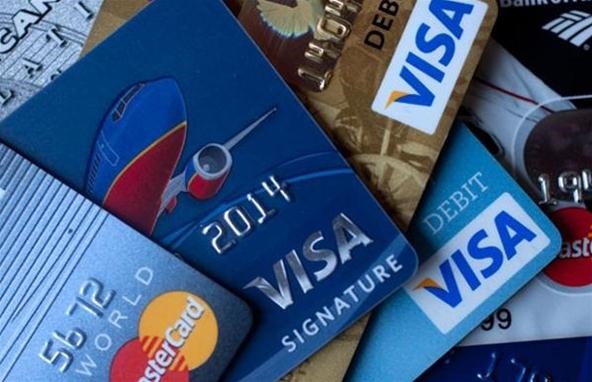
When he was arrested a few years ago, the laptop that he owned had more than 1.7 million stolen credit card numbers on it!

To try and get mercy Seleznev sent a letter to the judge earlier this month. He explained how his rough childhood including his life of poverty and his parents’ divorce had affected him deeply. His mother’s death when he was just 17 sent his world spiralling out of control; he had to drop out of college and try to pay the bills.

Image result for credit card hacking

During this tough time is when he discovered the trading of credit card data and that he could use his computer skills to hack into businesses.

After Seleznev’s strict sentencing, he made a statement of a different tone, claiming he was a political prisoner that was kidnapped by the US government.

A hacker can target anyone - even you! It can happen to anyone, so if you feel your computer or private data has been hacked do not hesitate to contact our TCG Forensic Division. Our digital forensic experts will assist you in any way you need! Call 087 001 0511/2 or email info@cellularforensics.co.za

Wednesday, 8 February 2017

Could my Computer be affected by a DDoS Attack?

Don’t think that you won’t be affected by a DDoS attack, because any computer is vulnerable to attack no matter how hard you try to protect it.

Related image

The malware could be installed on your PC without you even knowing, by clicking on an infected link or visiting a malicious website. Once your computer is contaminated your precious data is either lost, stolen or destroyed.

It is so important for you to make sure that your antivirus software is up-to-date, as well as to ensure that your PC has the latest security patches installed and a reliable firewall in pace. If you do not have any kind of protection you will become a target for hackers.

The digital forensic experts at DLA encourage everyone to install an antivirus program that is trustworthy before it is too late, however if your data is lost do not hesitate to contact them!


Connected devices such as smart phones and other smart devices can also become victims of a DDoS attack. To protect these devices you need to always make sure you have downloaded the most recent security updates.

Wednesday, 20 July 2016

What Exactly is Computer Forensics?

The field of computer forensics has grown to become a science in itself. Computer forensics is also known as cyber forensics. It involves applying computer investigation and analysis techniques to solve a crime and provide evidence to support a case. Investigators often use proprietary forensic applications and software programs to examine computer hard drives, extract certain types of data from files and folders, and also to recover information from encrypted files. This digital information must be organized and documented into an official report form to be presented in a court of law.

Computer Forensics Defined

The computer forensics definition can be broken down into several technical aspects of the actual science of computer forensics. The general definition of computer forensics is the processes and investigative methods used to find digital evidence and prepare it for legal proceedings. The more in-depth definition includes the preservation of media and data, identification of computer-related evidence, extraction of the data and interpretation. Interpretation is perhaps the most important element of the computer forensics definition because this is where forensics experts must draw conclusions from a formal forensic analysis.

Throughout the process of data gathering and interpretation, the computer forensics specialist must document everything in a structured fashion. They must report exactly what types of investigations were performed and document all of the steps taken to retrieve various files, folders and data. The courts can then apply various types of methodology and testimonies in order to determine whether evidence presented can actually be used in the legal proceedings. This is why computer forensics specialists must learn about the different legal processes involved in an investigation and make sure that there is always a high level of integrity of evidence.

Why the Computer Forensics Definition Can Change

It's important to recognize that there are two main types of computer forensics investigations so the computer forensics definition can change. The first involves investigations where a computer or digital technologies were used to perform the crime (cybercrime). The second is when a computer is used as the target of a crime, such as when a hacker retrieves sensitive information or someone has their identity stolen online. In both of these situations, the computer forensics definition may change slightly because the investigator uses different techniques and methodologies to solve the crime.


The digital forensic experts from DLA use their knowledge of investigation and forensic software to find and reveal the computer or mobile forensic evidence that your require.

Wednesday, 4 May 2016

The Profile of a Cyber Criminal

The original cyber criminal is typically seen as a smart, lonely deviant – a teenage or adult male who’s long on computer smarts, but short on social skills. But like most stereotypes, it doesn’t begin to tell the whole story.


The digital forensic experts at DLA have provided interesting facts and statistics to identify the exact profile of a cyber criminal.

- Every day over 105 million worldwide are victims to cyber crime.
- 65% global internet users have been victims of cyber crime.

So, who exactly are these cyber criminals?

Ageless Society
  • 50+ years old – 11%
  • 35+ years old – 43%
  • Under 25 years old – 29%
  • 14 - 18 years old – 8%


Gender
  • Male – 76%


Work in Packs
Cyber criminals work in groups as part of larger organisations…
  • 25% active cyber criminal groups have operated for 6 months or less
  • 50% cyber criminals groups have 6 or more members


Located in
  • North & South America – 19% of global attack traffic
  • Europe – 28% of global attack traffic
  • APAC – More than 49% of global attack traffic
  • Indonesia – Highest in APAC with 14%


Highly Organised
  • Full-fledged businesses with execs, middle managers and workers.
  • Underground chat rooms, web portals + market places for hiring hackers, buying malware + other illegal information are supporting these “businesses”.
  • Invitation-only, help wanted portals specifically for cyber criminals, most originating from Russia.
  • Hosting providers are key to success of cybercriminals who need servers to store illegal code, malware + stolen data, most of these providers are in Russia and China.


FIGHT BACK!

Always
  • If buying merchandise or making a payment online, make sure it is a reputable, secure source.
  • Track your online credit transactions often for fraudulent activity
  • Shred, don’t throw away any bank or credit card statements

Caution
  • Be wary of providing credit card information through email.
  • Be cautious when dealing with individuals from outside your country.
  • Be cautious when money is required up front for any job lead.

Never
  • Never provide unknown prospective employers with your social security number.
  • Never give your credit card number out over the phone unless you made the call to the known business.
  • Never open or respond to spam emails.


We can’t stop cyber criminals from attempting their crimes, but we can stop them from getting our identities and precious information online.

Wednesday, 6 April 2016

The demand for mobile forensics is continuously growing

Every day, more and more people are using smartphones. The amount of data which is wirelessly transmitted continues to increase at an impressive rate. According to the results of a survey there has been a huge increase in the number of active smartphones since 2011.


If you think about what our cell phones are today, they’ve actually moved away from simple cell phones and evolved into smartphones which are tiny, powerful computers that people are walking around with every day.

Digital forensic experts from DLA say that the value is not just in the cell phone call history and text messages. It’s about the ability to Google search whatever you want and have information at your fingertips. Cell phones have become diaries of people’s lives.

As digital detectives, DLA is trying to find out what was happening in somebody’s life, to whom they were talking, what the contents of those conversations were, and how they relate to the crime being investigated. This is indispensable evidence that can never be overlooked.


Mobile forensics examiners describe how there is probably more probative information found on a mobile device per byte examined than on computers.